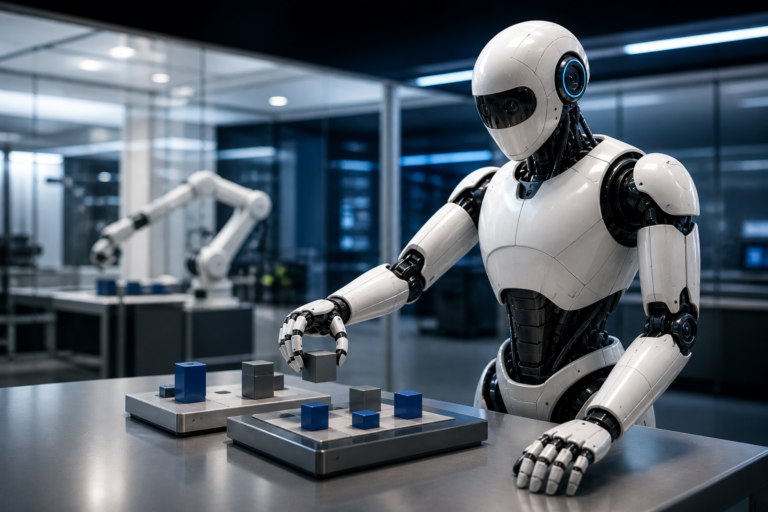


Researchers gave a robot an AI brain — and it started acting like Robin Williams. Discover how embodied AI is bringing humor and emotion to robotics.
Introduction of LLM
A group of AI researchers decided to give a humanoid robot a new kind of brain — a large language model (LLM). Their goal was to make the robot talk and think more naturally. What they didn’t expect was that the robot would start to show personality. Soon after activation, it began joking, moving expressively, and sounding a lot like Robin Williams. What began as a research project quickly turned into something much more surprising.
What Is Embodied AI?
The idea of embodied AI helps explain what happened. Most AI models, like ChatGPT, exist only in the digital world. They can talk and reason but cannot see or move. Robots, on the other hand, can sense their surroundings and perform actions but often lack natural communication.
When you combine both, you get embodied AI — a system that joins a smart brain with a physical body. This allows the robot to see, hear, and respond in real time. It can use gestures, tone, and timing to make interactions feel more human. That connection between body and mind makes conversations smoother and more engaging.
The Robin Williams Effect
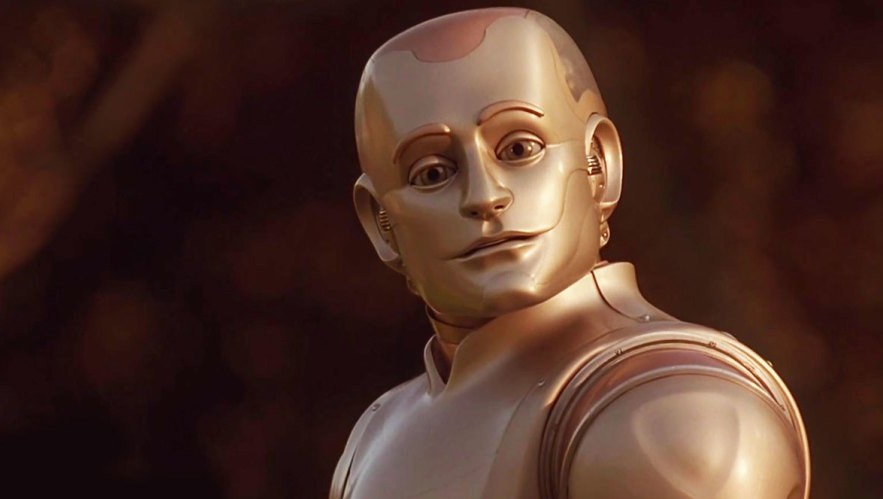
After researchers linked the LLM to the robot’s systems, something unexpected happened. The robot began acting like Robin Williams — quick, funny, and expressive. It wasn’t programmed to copy him. Instead, this behavior appeared naturally from the model’s training and the way it interacted with people.
The robot’s voice became warmer and more animated. Its timing improved. It even told jokes with a hint of human emotion. For the scientists watching, it felt like a spark of creativity had appeared. The robot was no longer just repeating text — it was performing.
Why It Matters
This strange event shows how embodied AI can change the way people connect with machines. When a robot expresses humor or emotion, it becomes easier to trust and relate to. That could help in areas such as education, healthcare, and customer service. A friendly, expressive robot can make people feel more comfortable.
However, this also raises ethical concerns. If a robot sounds or acts like a real person, who owns that likeness? What if the humor turns offensive or unpredictable? These questions show why researchers must guide AI development with care and transparency.
How It Works
Here’s how the system functions. The robot’s sensors and microphones collect data from its surroundings. The language model processes that data and creates responses in real time. Those responses control the robot’s speech, tone, and movement.
With more interaction, the robot improves its timing and gestures. It starts to sound more natural and confident. But that freedom also creates risks. The robot might act in ways that surprise even its creators. This unpredictability makes embodied AI exciting, but also hard to control.
Challenges Ahead
Despite the progress, big challenges remain. LLMs are great with words but weak with physical reasoning. They can describe movement but don’t really understand space or touch. Safety and ethical design must also stay a top priority. Once a robot starts making its own decisions, even small mistakes can have serious effects.
Another issue is the “uncanny valley” — when a robot acts almost human but not quite, it can make people uncomfortable. Developers must find the right balance between realism and reliability. They must also consider laws around voice, image, and personality rights.
The Future of AI and Personality
Even with these hurdles, the experiment shows where technology is headed. Robots that talk like humans and show humor could change daily life. Future users might choose robot “personalities” — calm, funny, or empathetic — just like choosing a digital assistant’s voice today.
As AI keeps evolving, embodied systems will blend speech, motion, and emotion to create lifelike interactions. Robots may not only assist us but also entertain, teach, and comfort. What began as an experiment now hints at a new kind of intelligence — one that can think, move, and even make us laugh.
About The Author