

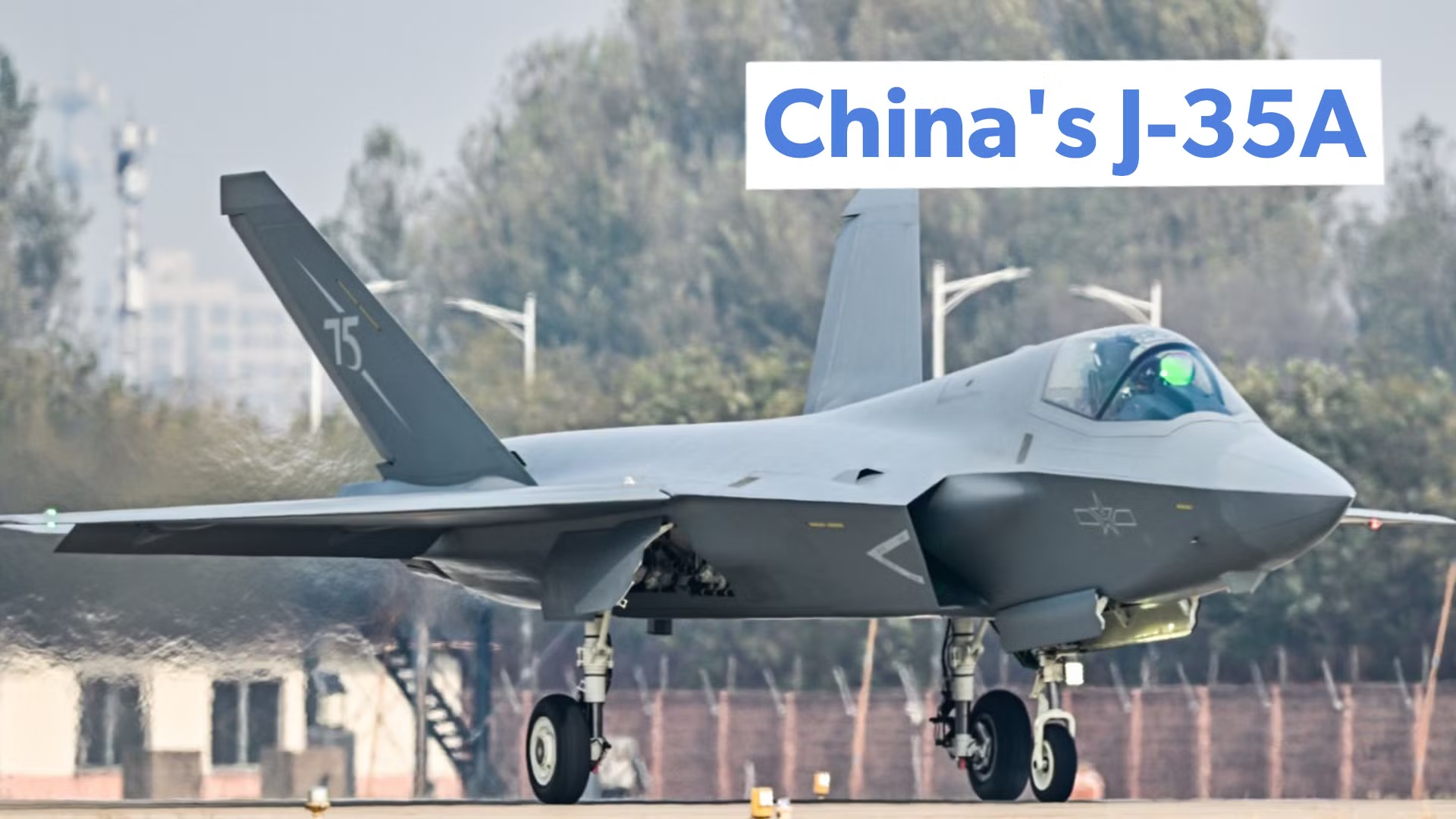
China is rapidly advancing its air superiority capabilities. Unveiled at the 2024 Zhuhai Air Show, the J-35A, derived from the FC-31, is a twin-engine, multi-role stealth fighter designed for the PLAAF, with a carrier-based variant for the PLAN. Its stealth features, including radar-absorbing materials and internal weapons bays, mirror the F-35, but its affordability allows China to potentially deploy a larger fleet, challenging U.S.

Is China’s J-35 Stealth Fighter a Threat to U.S. Air Power?
Caption: China’s J-35 stealth fighter is rising fast—can the U.S. Air Force maintain air dominance, or is a new era of military aviation unfolding?
What Is the J-35 Stealth Fighter?
The China J-35 stealth fighter, also known as the FC-31, is a fifth-generation stealth jet designed by Shenyang Aircraft Corporation. With low radar visibility, twin engines, carrier operations, and advanced weapons, the J-35 directly challenges U.S. F-35 Lightning II superiority.
Why the J-35 Matters for China
China’s military modernization strategy makes the J-35 vital. It signals:
- Stealth dominance ambitions in Asia.
- A push for carrier-based air superiority.
- A geopolitical message to the U.S. Air Force and allies.
By advancing the J-35, China seeks not only combat strength but also global influence in defense technology.
Comparing the J-35 to the U.S. F-35
The U.S. F-35 fighter jet remains the world’s most advanced stealth aircraft, but the J-35 jet fighter narrows the gap.
- Stealth advantage: F-35 tested, J-35 unproven.
- Avionics: U.S. leads in sensor fusion, China rapidly improves.
- Operational experience: U.S. Air Force pilots are battle-ready, China still learning.
- Production scale: China may mass-produce J-35s, shifting the balance of air power.
This comparison shows a fast-closing race in stealth fighter technology.
Strategic Implications for the U.S. Air Force
The J-35 stealth aircraft forces the U.S. to rethink:
- Taiwan defense and Asia-Pacific operations.
- Carrier rivalry between U.S. Navy F-35C and China’s J-35.
- Innovation race in stealth, AI, and electronic warfare.
- Global defense exports, as nations consider Chinese jets over U.S. fighters.
The U.S. Air Force must stay ahead to preserve its air dominance.
Is the J-35 Truly a Threat?
The J-35 may not yet surpass the F-35 fighter jet, but it is a credible threat. China’s progress in stealth combat aircraft is faster than expected.
The U.S. still leads with:
- Proven stealth combat jets (F-22, F-35).
- Allied air networks like NATO.
- Superior pilot training and combat data.
Yet ignoring China’s J-35 stealth fighter jet could risk U.S. air superiority in the coming decade.
Conclusion
The China J-35 fighter jet is more than hardware—it is a message of power to the U.S. Air Force. While America’s F-35 Lightning II still dominates, the aerospace competition has entered a new era.
The question isn’t only “Is the J-35 better than the F-35?” but rather “How fast can China close the gap?” For the U.S. Air Force, staying ahead means doubling down on innovation, partnerships, and next-generation
About The Author