
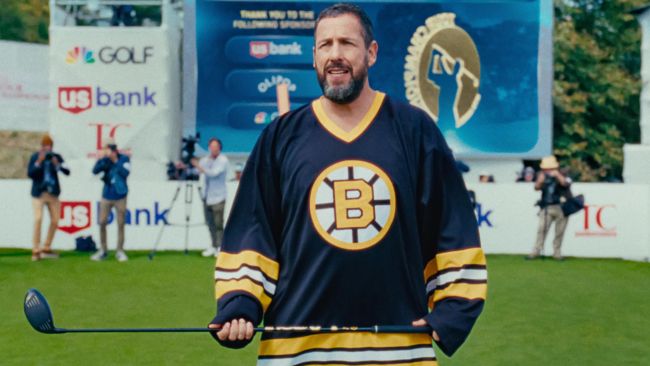
In Happy Gilmore 2, Adam Sandler’s Happy battles his old rival, Shooter McGavin (Christopher McDonald), to save the traditional golf tour and fund Vienna’s dreams. With cameos from Rory McIlroy, Travis Kelce, and Post Malone, plus Ben Stiller as Hal L., the film leans on star power. While Adam Sandler delivers laughs and heart, critics note the overcrowded cameos and bloated plot make Happy Gilmore 2 a nostalgic but uneven follow-up to the 1996 classic.
Happy Gilmore 2: Adam Sandler’s Nostalgic Yet Uneven Sequel
After more than two decades, Happy Gilmore 2 returns, starring Adam Sandler as the quirky, underdog golf pro. The original Happy Gilmore (1996) is a cult classic, celebrated for its offbeat humor, physical comedy, and Sandler’s unique charm. Fans approached the sequel expecting nostalgic callbacks, updated comedy, and fresh storytelling, and the movie delivers in parts—but not consistently.
Returning to the Greens
Happy Gilmore 2 follows Happy Gilmore years after his first PGA triumph. Now older and somewhat wiser, he faces new challenges both on and off the golf course. The film emphasizes nostalgia, bringing back classic lines, cameos, and beloved secondary characters.
While these callbacks delight long-time fans, the movie sometimes struggles with balancing old-school humor and modern comedic sensibilities. Some jokes feel dated, while others miss their mark, creating a slightly uneven comedic rhythm.
Adam Sandler’s Performance
Adam Sandler remains the film’s highlight. His portrayal of Happy Gilmore is endearing, chaotic, and unpredictable, blending physical comedy with heartfelt moments. Returning fans will appreciate that Happy still embodies the lovable underdog spirit.
Supporting roles include both familiar characters and new additions. While some bring extra humor and depth, others feel underdeveloped, included mainly for comic relief.
The Humor: Nostalgia Meets Modern Comedy
One of Happy Gilmore 2’s strengths—and weaknesses—is its humor. The film attempts to capture the chaotic, irreverent comedy of the first movie while updating it for today’s audience. Physical gags, slapstick moments, and absurd scenarios remain central, appealing to fans of classic Sandler comedy.
However, some modern jokes feel forced or inconsistent with Happy’s character. The film occasionally relies too heavily on nostalgic references, which may confuse newcomers or casual viewers.
Golf, Chaos, and the Underdog Spirit
The movie retains the quirky charm of the original, particularly in its golf sequences. Happy Gilmore 2 skillfully combines sports action with comedic chaos, creating moments both thrilling and hilarious. Happy’s unpredictable style, mishaps, and antics keep the spirit of the original alive.
The underdog theme is central, emphasizing resilience, perseverance, and staying true to oneself. Although predictable at times, this message reinforces what fans love about Happy Gilmore.
Nostalgia vs. Fresh Storytelling
The sequel’s reliance on nostalgia can sometimes overshadow fresh storytelling. Certain scenes prioritize laughs and callbacks over coherent plot development. Nevertheless, fans will enjoy the Easter eggs and references that maintain continuity with the original movie.
Conclusion
Happy Gilmore 2 succeeds in recreating the spirit of the original while delivering moments of genuine laughter and nostalgia. Adam Sandler shines in his iconic role, and fans will enjoy chaotic golf sequences, beloved characters, and classic humor.
However, uneven pacing, occasional forced jokes, and heavy reliance on nostalgia prevent it from fully matching the original’s charm. Newcomers may find the humor inconsistent, while long-time fans will appreciate the callbacks and heartwarming moments.
Ultimately, Happy Gilmore 2 is a nostalgic, entertaining sequel that honors its predecessor while reminding audiences why Happy Gilmore remains a comedy favorite. It delivers enough laughs, chaos, and golf mayhem to satisfy both fans and casual viewer
About The Author