

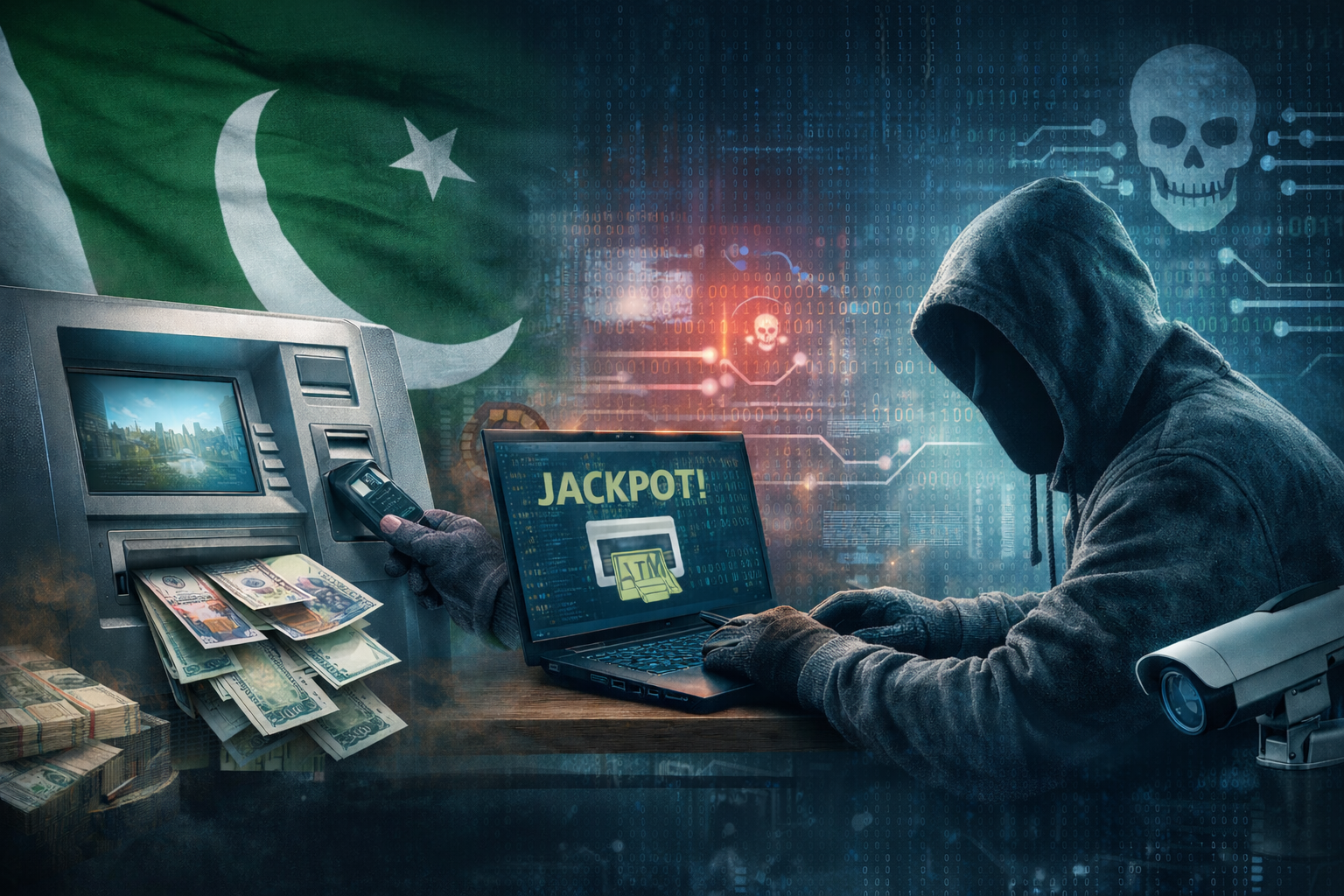
Hackers are using advanced malware to target ATM machines in Pakistan, raising serious concerns about banking security and cash safety nationwide.
ATM Security in Pakistan Is Under Pressure
ATM security in Pakistan faces a serious threat. Recently, hackers found a new way to steal cash. Instead of using stolen cards, they attack the machine itself.
This method is called ATM jackpotting. In simple words, it forces the ATM to release cash. As a result, criminals do not need a debit card.
Millions of people use ATMs every day. Therefore, any weakness can harm public trust. For this reason, banks are acting quickly.
What Is the New Hacking Method?
Hackers are using malware called Ploutus. Basically, this malware infects the ATM system. It gives criminals control of the cash dispenser.
Ploutus does not steal card details. Instead, it skips the login process. Then, it sends direct commands to the machine.
Once activated, the ATM starts releasing cash. Because of this, criminals can empty a machine in minutes.
How Do Hackers Access the Machine?
First, attackers open the ATM cabinet. They may use fake keys. Sometimes, they break weak locks.
Next, they connect a USB device. They install the malware on the internal computer.
After that, they enter a secret code or send a remote signal. As a result, the ATM dispenses cash. It does not record a normal transaction.
Because the system is bypassed, banks may not detect the attack quickly.
Why Is Pakistan at Risk?
Pakistan has thousands of ATMs. However, many stand in small kiosks. These places often have limited security.
In addition, some machines run old software. Old systems are easier to hack.
Cash is still common across the country. Therefore, ATM problems can affect daily life.
The State Bank of Pakistan has asked banks to improve security. As a result, many banks are reviewing their systems.
What Are Banks Doing?
To stop these attacks, banks are upgrading security. They are installing stronger locks. They are adding better cameras and alarms.
On the technical side, banks are updating software. They are limiting which programs can run. Moreover, they are monitoring ATMs in real time.
In some cases, banks are separating ATM networks from main banking systems. This way, damage stays limited.
What Should Customers Do?
These attacks do not steal money from customer accounts. Instead, hackers take cash from the machine.
Even so, repeated attacks can reduce ATM availability.
Therefore, customers should use ATMs inside bank branches when possible. Also, they should report suspicious machines.
Public awareness helps banks respond faster.
Conclusion
ATM security in Pakistan faces a growing challenge. Clearly, malware like Ploutus has changed ATM fraud.
Hackers now target machines directly. Because threats continue to grow, banks must stay alert.
Ultimately, stronger locks, updated software, and better monitoring will protect both banks and customers.
About The Author