

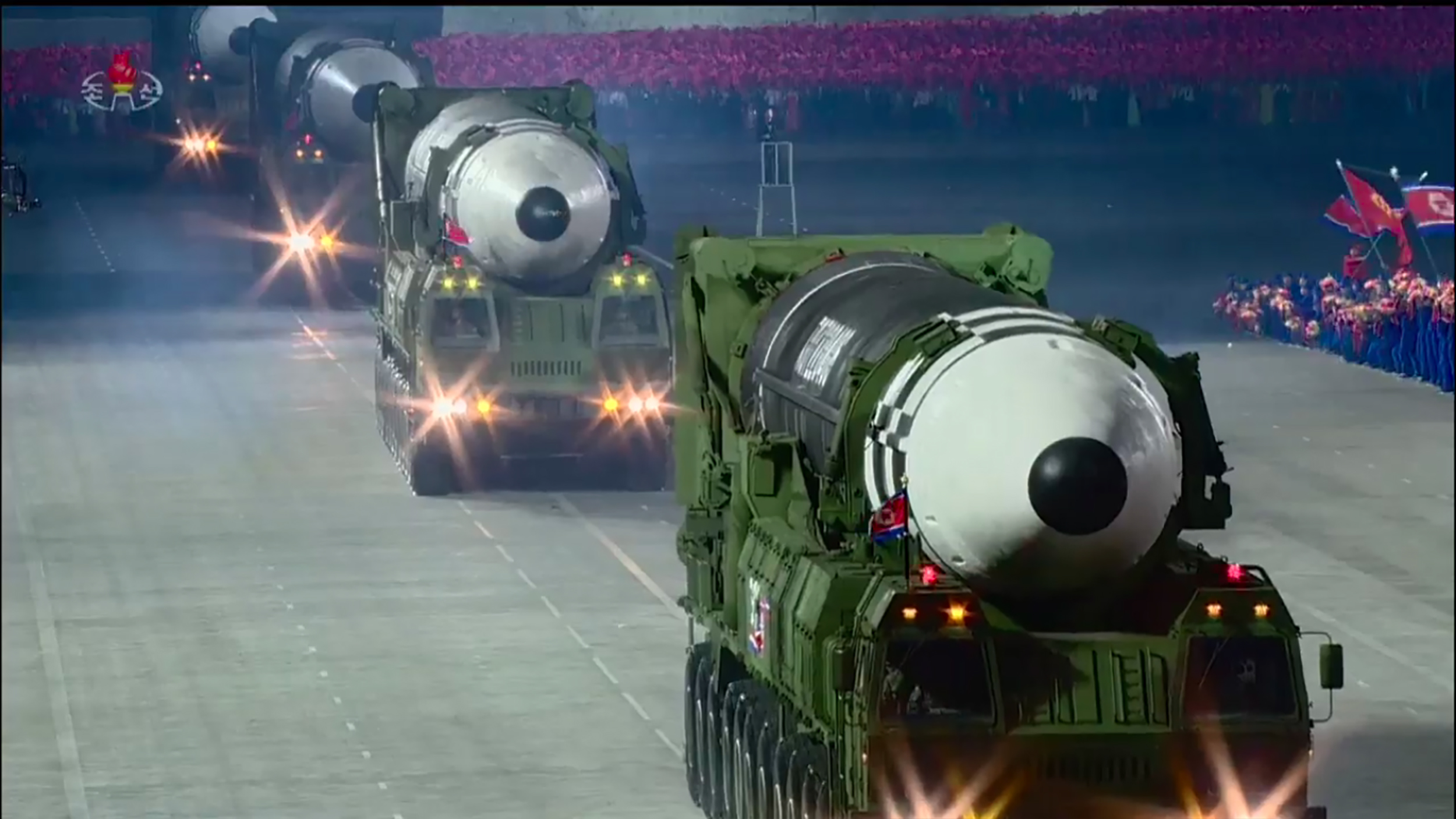
North Korea reveals its most powerful intercontinental missile yet during a massive military parade in Pyongyang. Global tensions rise once again.
A Show of Power in Pyongyang
In a grand display of military strength, North Korea unveiled a new intercontinental ballistic missile (ICBM) during a massive parade in Pyongyang. The event, held to mark a key national anniversary, featured thousands of troops, armored vehicles, and advanced weaponry. However, the highlight was the debut of what analysts believe to be North Korea’s most powerful missile yet. The display has sparked global concern and renewed debates about regional security and international diplomacy.
A Closer Look at the New Missile
The newly revealed missile appears larger and more advanced than previous models shown by Pyongyang. Experts suggest that it could potentially carry multiple nuclear warheads and reach targets far beyond Asia, possibly including the continental United States. This latest development highlights North Korea’s growing missile capabilities and its determination to strengthen its nuclear deterrent.
Moreover, the missile’s size and design indicate significant improvements in range, payload capacity, and mobility. Mounted on a massive transporter vehicle, it demonstrates North Korea’s ambition to project strength despite international sanctions and isolation. According to defense analysts, this new ICBM represents one of the country’s most ambitious technological leaps to date.

The Parade: Symbolism and Strategy
North Korea’s military parades are not only national celebrations but also strategic messages to the world. Through these events, the country showcases its progress in defense technology and reinforces its image of resilience. During this parade, thousands of soldiers marched in perfect synchronization, while advanced drones, tanks, and artillery systems filled the streets of Pyongyang.
The presence of the country’s top leadership, including Kim Jong Un, added political weight to the spectacle. Kim praised the country’s defense scientists and urged continued innovation in military technology. His speech emphasized national pride and self-reliance, echoing the country’s long-standing “Juche” ideology. As a result, the parade served both as a domestic morale booster and an international statement of defiance.
International Reactions and Rising Tensions
The unveiling of the new ICBM quickly drew attention from around the world. The United States, South Korea, and Japan expressed deep concern, calling it a provocative act that threatens regional stability. In response, military and intelligence agencies began closely analyzing satellite imagery to assess the missile’s capabilities.
Meanwhile, the United Nations urged restraint and dialogue, reminding all parties of the importance of peace and security in the region. However, tensions remain high. Many analysts fear that this latest display could lead to a renewed arms race in East Asia, especially as other nations strengthen their defense systems in response.
A Message Beyond the Military
While the parade highlighted military power, it also conveyed a broader message. North Korea’s leadership aimed to show that despite economic hardship and international pressure, the country continues to advance technologically. Furthermore, the timing of the event suggested a desire to remind the world that North Korea remains a key player in global security discussions.
By presenting this missile publicly, Pyongyang reinforces its belief that nuclear deterrence is vital for its survival. This message was directed not only at foreign powers but also at its own citizens, emphasizing national pride and unity under the ruling government.
What This Means for Global Security
The introduction of a more advanced ICBM could change the balance of power in the region. If operational, this missile could reach farther and carry heavier payloads than any of North Korea’s previous weapons. As a result, experts warn that diplomatic efforts to control North Korea’s nuclear program may become even more challenging.
Still, many hope that increased dialogue and renewed peace talks can prevent further escalation. In the coming months, attention will likely focus on how neighboring countries and major powers respond. The world now watches closely as the geopolitical stakes in the Korean Peninsula continue to rise.
Conclusion: Power, Politics, and Uncertainty
The unveiling of North Korea’s new intercontinental missile marks another milestone in the country’s pursuit of military strength. It underscores Pyongyang’s commitment to developing advanced defense technology despite global opposition. At the same time, it raises urgent questions about the future of diplomacy, deterrence, and peace in East Asia.
As the missile rolled through Pyongyang’s brightly lit streets, it symbolized both technological ambition and strategic defiance. For now, one thing is clear — North Korea’s latest show of power will continue to shape international relations and fuel debates about security, stability, and the future of nuclear diplomacy.
About The Author