
China is pushing the limits of science again! Its upgraded “Artificial Sun” aims to create burning plasma, bringing us closer to infinite clean energy.
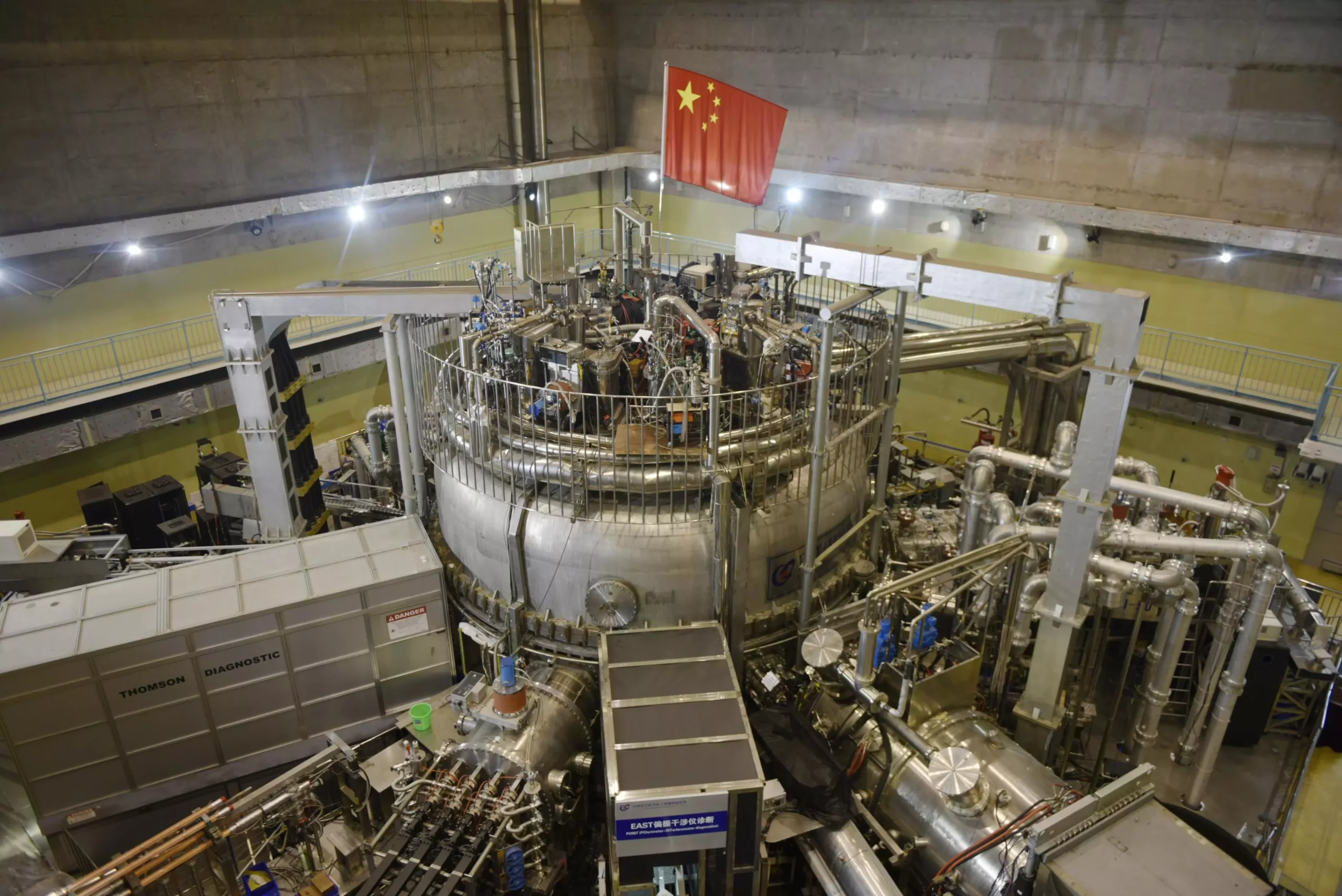
China is taking a big step toward clean energy. Its “Artificial Sun” project, called the Experimental Advanced Superconducting Tokamak (EAST), is now entering a new phase. Scientists are preparing new tests that could lead to a major breakthrough — creating burning plasma, a key step toward endless fusion power.
What Is China’s Artificial Sun?
The China Artificial Sun project tries to copy the same process that powers the real sun. Instead of splitting atoms like in nuclear fission, fusion joins hydrogen atoms to make helium. This reaction releases huge amounts of energy but produces no carbon emissions and very little waste.
Because it is clean and safe, fusion energy could supply the world with unlimited power. It could also reduce our need for oil, gas, and coal, helping fight climate change.
How the EAST Reactor Works
The EAST reactor, located in Hefei, Anhui province, is part of the Chinese Academy of Sciences. It creates extreme heat and pressure to fuse hydrogen atoms. Inside, strong magnets trap a super-hot gas called plasma, which can reach over 150 million°C — about ten times hotter than the sun’s core.
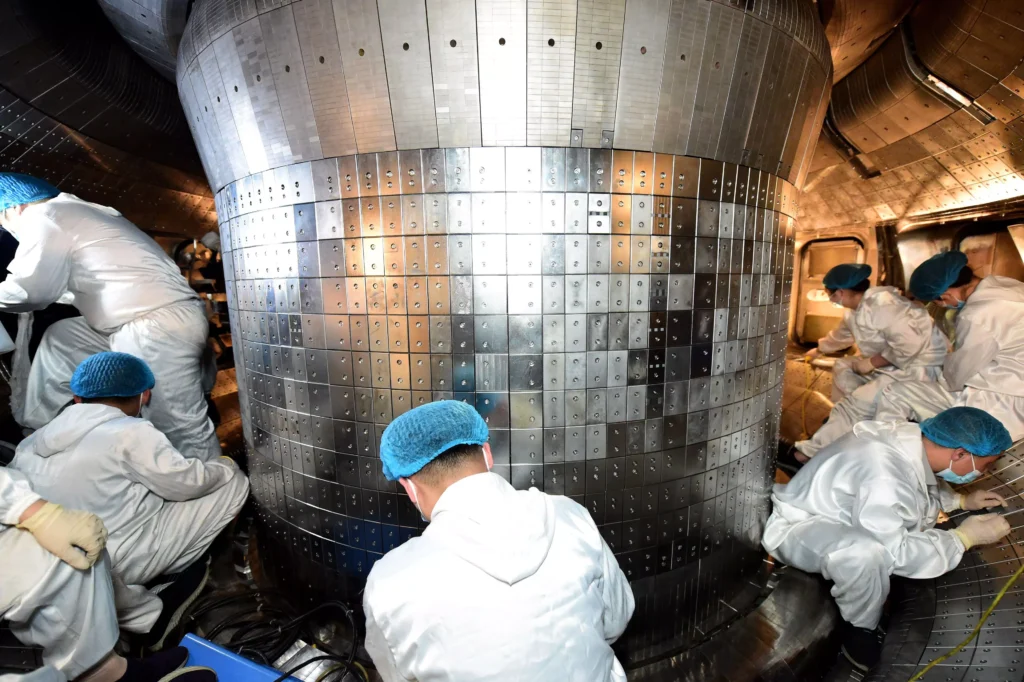
Keeping this plasma stable is very hard. Even small changes can stop the reaction. To improve control, Chinese scientists have upgraded the magnets and the systems that manage heat and power. These changes make the reactor safer and more efficient.
China’s Record-Breaking Results
In recent years, the Artificial Sun has set several world records. In 2021, it reached 120 million°C for 101 seconds, and later kept 70 million°C for more than 1,000 seconds. These results show China’s growing skill in fusion research.
Now, the next goal is to create burning plasma. In this state, the fusion process produces enough heat to keep itself going. If achieved, it would be a huge step toward real fusion power plants that could one day supply clean energy for everyone.
New Reactor Upgrades
To reach that goal, scientists have added several upgrades to the EAST system:
- Stronger magnets to keep the plasma in place
- Better cooling systems to handle the heat
- New sensors for real-time monitoring and control
These changes will help make the plasma last longer and stay more stable. Each upgrade brings the team closer to proving that fusion energy can work safely and efficiently on Earth.
The Global Fusion Race
Many countries are working toward fusion energy. The ITER project in France, the SPARC project in the U.S., and Japan’s JT-60SA are also making progress. However, China’s steady results and strong support from the government give it a clear advantage.
EAST will also help build the next project — the China Fusion Engineering Test Reactor (CFETR). Planned for the 2030s, CFETR will test whether fusion can produce electricity continuously. If successful, it could be the world’s first working fusion power plant.
A Brighter, Cleaner Future
There are still challenges ahead. Scientists must find materials that can survive intense heat and radiation for long periods. They must also make sure that the reactor produces more energy than it uses. Even so, progress continues at a steady pace.
If China’s next burning plasma tests succeed, it could start a new age of clean power. The Artificial Sun shows how science and innovation can work together to solve global problems. With each step forward, the dream of safe, unlimited energy comes closer to reality.
About The Author